SKU:PR-1142829
DreamStations2 Ultra-Fine Disposable CPAP Filters
Couldn't load pickup availability
IMPORTANT: THIS FILTER IS FOR THE DREAMSTATION 2 ONLY — NOT COMPATIBLE WITH THE ORIGINAL DREAMSTATION OR DREAMSTATION GO
The DreamStation 2 and the original DreamStation (first generation) share a manufacturer and a product family name, but they have different chassis and different filter housing geometry. The ultra-fine filter for the DreamStation 2 — part numbers 1142828, 1142829, and 1142831 — does not fit the original DreamStation, and the original DreamStation filter does not fit the DS2. They are not interchangeable.
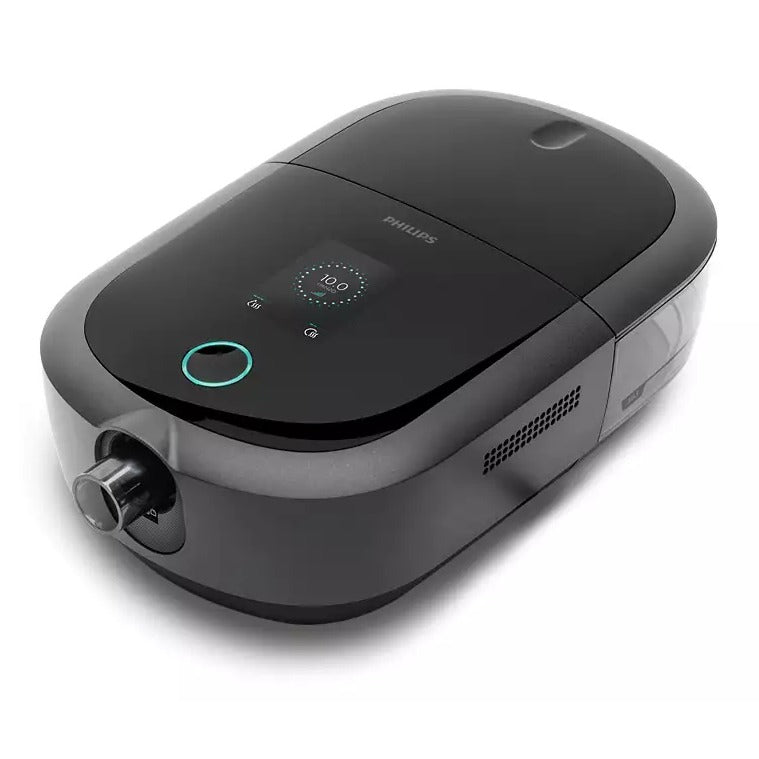
This matters because both filter generations use a light blue plastic housing and both are sold under the Philips Respironics name with nearly identical descriptions. A patient searching for a DreamStation ultra-fine filter can plausibly land on the wrong product, order confidently, and receive a filter that physically will not seat correctly in their machine. If your machine is a DreamStation 2 — the model released in 2021 with a slimmer, redesigned body — this is the correct listing. If your machine is an older DreamStation, you need part number 1122447 (single) or 1122519 (six-pack), which are sold separately.
The DreamStation Go also uses a different filter system and is not compatible with this filter.
HOW THE TWO-FILTER SYSTEM WORKS — FOAM POLLEN FILTER AND ULTRA-FINE TOGETHER
The DreamStation 2 filters incoming air through two separate filter elements that are installed together as a single assembly. The outer, reusable component is the grey foam pollen filter (part 1142687). It sits in a slot at the air intake on the side of the machine and handles the bulk of particulate filtration — dust, pet dander, pollen, and other larger airborne particles. The foam filter is washable and is replaced every three to six months rather than monthly.
The ultra-fine disposable filter is the second element. It is made of white polyester fiber material mounted in a light blue plastic housing, and it attaches to the base of the foam pollen filter before both are inserted into the machine together. The installation sequence is straightforward: slide the foam filter out of its slot, snap the ultra-fine filter onto the base of the foam filter, then insert the combined assembly back into the machine. The two filters function as a system, not as alternatives to each other. The foam layer acts as a pre-filter that intercepts larger particles before they reach the ultra-fine layer, which slows the rate at which the finer media loads and extends its effective life.
All filtered air passes through this assembly before reaching the blower. Contaminated air never enters the motor or internal components of the machine.
WHAT "ULTRA-FINE" CAPTURES — AND WHY THE FOAM FILTER ALONE ISN'T ENOUGH FOR ALL PATIENTS
The foam pollen filter handles particles roughly 10 microns and larger — the category that includes most visible dust, pet dander, and pollen grains. Particles smaller than that threshold pass through the foam layer without being captured. The polyester fiber matrix of the ultra-fine filter operates in a finer range, capturing the smaller particulate matter that the foam layer allows through.
For patients with allergies, asthma, or respiratory sensitivities — or for anyone sleeping in an environment with elevated fine particulate matter — the ultra-fine layer provides filtration the foam filter cannot. The foam filter alone is sufficient for general use in clean environments. The two-filter system addresses environments where that baseline is not enough. HCPCS code A7038 applies to this ultra-fine filter. The foam pollen filter carries code A7039.
WHERE THE FILTER SIT IN THE MACHINE AND WHAT HAPPENS TO AIRFLOW AS IT LOADS
The filter assembly mounts at the air intake port on the side of the DreamStation 2. Every breath the machine delivers has been drawn through this assembly first. Because the blower pulls air from outside the machine, the filter is positioned upstream of all internal components — the motor, the impeller, and the pressure-regulation hardware are all downstream of the filter and never exposed to unfiltered air.
As the polyester fiber loads with particulate over time, the resistance it presents to incoming airflow increases. The blower motor compensates by working harder to draw the same volume of air through the increasingly restricted filter media. This increased mechanical load places additional stress on the motor over time. If filter loading becomes significant enough, the machine may be unable to fully compensate, and delivered therapy pressure can drop incrementally below the prescribed level — a change the patient may not notice but that represents a degradation in therapy quality.
A loaded filter can also become a substrate for microbial growth, particularly in patients using a heated humidifier, whose exhaled moisture recirculates through the system. In high-humidity conditions or homes with mold, a filter left past its replacement date is no longer simply less effective — it can become a source of contamination rather than a barrier against it.
The DreamStation 2 has no electronic indicator that monitors filter condition or alerts the patient when replacement is due. Replacement is entirely the patient's responsibility and is based on schedule and visual inspection. When the filter is removed for inspection, discoloration — the white polyester fiber turning grey, dark grey, or showing brown patches — is the indicator that replacement is needed. A filter that reaches that state may already be restricting airflow or hosting microbial growth.
REPLACEMENT SCHEDULE — AND HOW PETS, DUST, AND SMOKE CHANGE IT
Philips recommends replacing the ultra-fine filter every 30 days, or sooner if it appears visibly discolored when inspected. That 30-day schedule assumes a reasonably clean indoor environment. In practice, a number of common household conditions load the polyester fiber faster than the standard schedule anticipates, and patients in those environments should inspect the filter more frequently and replace it before the 30-day mark if discoloration is present.
Pets in the bedroom are the most common factor that shortens the effective filter life. Pet dander is fine enough to pass through the foam pollen layer and loads the ultra-fine media quickly. High-pollution urban environments and proximity to active construction sites introduce elevated fine particulate that has the same effect. Dry or dusty climates, wildfire smoke season — particularly in western Canada — and homes with elevated humidity or mold are additional conditions that accelerate filter loading. Running the DreamStation 2 without the foam pollen filter in place also sends all incoming particulate directly to the ultra-fine layer, bypassing the pre-filtration that normally distributes the load, and will exhaust the ultra-fine filter significantly faster.
In all of these situations, the visual inspection check is more important than the calendar. A filter that looks clean at 30 days is probably fine. A filter that shows any discoloration at two weeks should be replaced regardless of the schedule.
WHICH PACK SIZE TO ORDER
At the standard replacement schedule of one filter per month, a pack of 1 lasts one month, a pack of 2 lasts two months, and a pack of 6 lasts approximately six months. For most patients, the 6-pack is the rational choice. It aligns with a twice-yearly restocking cycle, keeps a supply on hand so a replacement is always available when the 30-day mark arrives, and reduces the per-unit cost compared to ordering singles.
The pack of 1 is the right starting point for patients who are adding the ultra-fine filter to their routine for the first time and want to confirm it fits their machine and installs correctly before committing to a larger quantity. Once that first filter is in place and confirmed, moving to the 6-pack on the next order is straightforward.
The pack of 2 suits patients who replace their filter more frequently than once a month. A patient in a high-pet or high-dust environment replacing every two weeks, for example, would exhaust a 6-pack in about three months rather than six — in that case, ordering smaller quantities more often or buying the 6-pack on a shorter reorder cycle both work. The 2-pack provides a middle option for patients still establishing how quickly their environment loads the filter before committing to the largest quantity.
HOW TO CONFIRM YOU HAVE THE RIGHT FILTER — DS2 VS. ORIGINAL DREAMSTATION PART NUMBERS
Because both the DreamStation 2 filter and the original DreamStation filter use a light blue plastic housing and are sold under similar names, visual identification is not a reliable method for confirming you have the correct product. The housings look similar enough that a patient comparing the two side by side without reading the packaging could reasonably mistake one for the other.
The reliable confirmation is the part number. DreamStation 2 ultra-fine filters carry part numbers 1142828 (single), 1142829 (two-pack), and 1142831 (six-pack). Original DreamStation ultra-fine filters carry part numbers 1122447 (single) and 1122519 (six-pack). If the packaging or product listing shows a part number beginning with 1122, it is an original DreamStation filter and will not seat correctly in a DS2. If it begins with 1142, it is a DreamStation 2 filter.
This listing covers part numbers 1142828, 1142829, and 1142831. If you are uncertain which DreamStation generation you own, the product label on the underside of your machine will show the model name — the DreamStation 2 will be identified as such, while the original DreamStation will show as DreamStation CPAP, DreamStation Auto CPAP, or a similar first-generation designation without the "2."
SPECIFICATIONS
SPECIFICATIONS
Not Compatible With All DreamStation (Original) & DreamStation Go Series Machines.
WARRANTY
WARRANTY
No warranty for filters
PACKING LIST
PACKING LIST
pack of Cpap filters (1,2 or 6)